
In the 19th century, the profession of bear trainer emerged in Ariège. Many local inhabitants began capturing bears, training them and presenting them in public shows. This unusual trade quickly crossed the Atlantic and contributed to the international reputation of the region.
It is a little-known story: bear trainers from Ariège played a key role in making the department famous in the United States. This profession dates back to the Middle Ages and was originally practiced by nomadic communities. However, it truly developed in Europe during the 19th century, particularly in Ariège. The inhabitants of the Alet (Ustou) and Garbet (Aulus-Ercé-Oust) valleys, living in harsh conditions, saw this activity as a way to escape poverty.
Some Ariégeois therefore began hunting bears, capturing and training them. The profession quickly became structured, and the village of Ercé even opened its own bear training school. Once trained, the bears, wearing muzzles, were presented in public squares and performed circus-style acts. These shows were first held in France before being exported to Spain and England.
Some bear trainers traveled as far as Scotland, while others ventured overseas to Canada, the United States and even South America. Nearly 600 bear handlers from Ariège crossed the ocean. Their success was remarkable, and the bear became a true star. In the late 19th and early 20th centuries, bears regularly appeared on the front pages of New York newspapers. For these adventurous Ariégeois, life in the United States offered far better opportunities than in France.
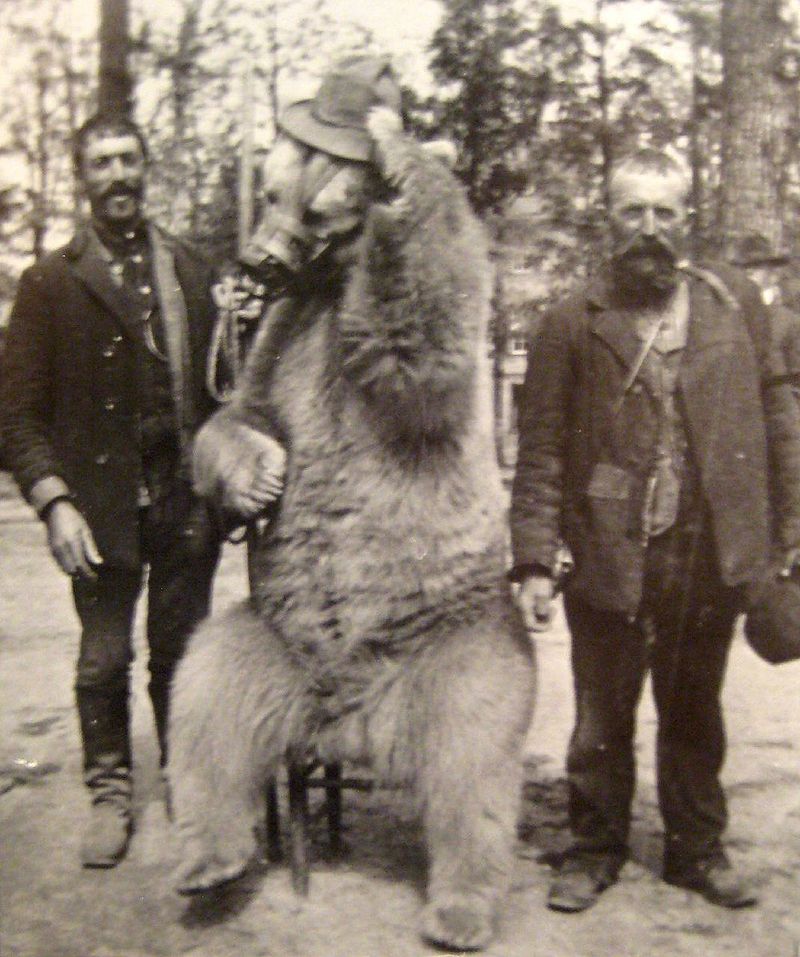 Bear trainers making bears dance in the United States around 1900.
After earning enough money, many bear trainers returned to Ariège to buy land. Others chose to remain in the United States, where they were recruited by circuses. However, in 1921, the profession suffered a major setback when public wild animal shows were banned. Many trainers then changed professions or returned permanently to France.
After their complete disappearance, the reintroduction of Slovenian bears into the Pyrenees has been a real success. The animals found a suitable natural habitat and their population quickly increased. Today, they form a stable population, mainly concentrated in the areas they historically occupied.
However, livestock farmers who practice summer grazing at high altitude no longer live permanently with their herds as they once did. Bears sometimes take advantage of this situation to prey on livestock.
Tensions between farmers and environmentalists have increased significantly and continue to rise as the bear population grows.
Once a source of wealth for many families, bears are now seen as the ultimate predator, uniting sheep and cattle farmers and much of the local population against them.


